Module 1: Introduction to LinkedIn Marketing
LinkedIn is often mistakenly viewed as merely an online resume platform. However, for professionals and businesses alike, it has evolved into the world’s most powerful professional networking and B2B marketing hub. This introduction establishes a foundational understanding of its significance and functionality of LinkedIn marketing strategies.
What is LinkedIn Marketing?
LinkedIn Marketing encompasses the strategies and tactics utilized by individuals and businesses to achieve specific professional goals on the platform. These goals frequently include building a strong personal brand, generating qualified B2B leads, driving website traffic, and cultivating industry influence. The execution of effective marketing on this platform requires a nuanced approach, which prioritizes professionalism and value exchange over traditional social media tactics.
Importance of LinkedIn for B2B & B2C Marketing
LinkedIn holds unparalleled importance in the digital marketing landscape, particularly for business-to-business (B2B) operations. Why is this the case? Decision-makers and industry leaders are concentrated here, making targeting highly efficient.
- B2B Marketing: LinkedIn is responsible for generating more than 80% of B2B social media leads. This platform allows companies to reach specific job titles, industries, and company sizes with precision, which is crucial for high-value sales cycles.
- B2C Marketing: While not the primary focus, B2C brands can utilize LinkedIn for recruiting top talent, establishing corporate social responsibility, and positioning their leadership as experts.
Understanding the LinkedIn Algorithm (2025 Update)
The LinkedIn algorithm is continuously updated, but its core principle remains constant: Prioritize posts that foster genuine professional conversation. The 2025 updates place even greater emphasis on native content and early engagement signals.
The current algorithm typically follows a three-stage testing process:
- Stage 1 (Initial Test): Your post is shown to a small sample of your network (1st-degree connections). High engagement (Comments > Shares > Likes) in the first hour is critical.
- Stage 2 (Viral Potential): If the initial engagement is strong, the post is distributed widely to 2nd and 3rd-degree connections, and also to people who follow the hashtags you used.
- Stage 3 (Quality Assessment): A human review may assess the post’s quality and relevance. The use of native content (documents, carousels, articles) is consistently favored over external links (which take users away from the platform).
Key Differences Between LinkedIn and Other Social Media Platforms
There are key differences between LinkedIn and other platforms like Facebook or Instagram. These distinctions mandate a tailored content approach.
| Feature | LinkedIn (Professional) | Other Social Platforms (Social/Entertaining) |
| User Intent | Career, Industry Knowledge, Networking, Hiring | Entertainment, Personal Updates, News, Shopping |
| Content Focus | Thought Leadership, Case Studies, Professional Insights | Lifestyle, Humor, Personal Opinions, Short-Form Videos |
| Engagement Value | Comments and reshares are highly valued. | Likes and views often dominate. |
| Tone & Language | Formal and professional. | Casual and conversational. |
Types of LinkedIn Accounts: Free, Premium, and Sales Navigator
Users have several account options available, each unlocking varying levels of features.
- Free Account: Ideal for basic networking, consuming content, and profile optimization. It includes limited search and InMail capacity.
- Premium Career/Business: Provides greater visibility, detailed viewer insights, access to LinkedIn Learning, and increased search features.
- Sales Navigator: This specialized tool is indispensable for B2B sales professionals. It offers advanced lead filtering, saved leads, and targeted InMail capacity for direct sales outreach.
Module 2: Profile Optimization
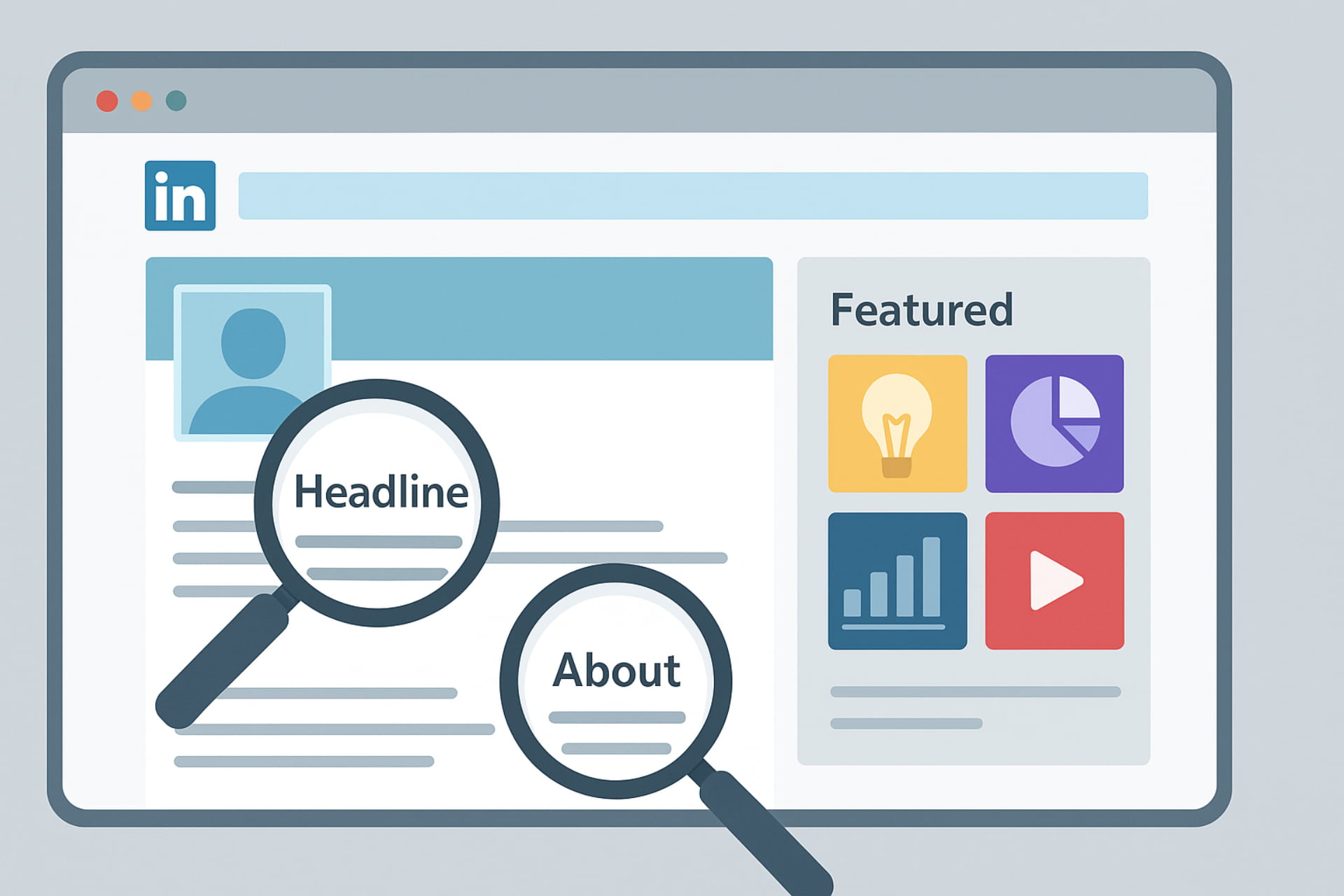
Your LinkedIn profile is not a static resume; it is a dynamic landing page and a crucial lead generation tool. Optimizing it is the first critical step toward establishing authority.
Crafting a Professional Headline & Summary
The headline is your single most important SEO element. It is shown everywhere your name appears.
- Professional Headline: Use this space to clearly state what you do and who you help. Include 2-3 core keywords. For example: “B2B SaaS Content Strategist | Helping Tech Startups Scale Revenue with Organic Marketing | WordPress & SEO Expert.”
- Summary (About Section): This section should be written in the first person. Structure it with clear, short paragraphs and transition words. Start with a compelling hook, detail your professional journey (problem, solution, results), and conclude with a strong Call-to-Action (CTA), such as: “Connect with me to discuss B2B content strategy.”
Optimizing Profile Banner and Profile Picture
Visual elements create the essential first impression. They should convey professionalism and brand alignment.
- Profile Picture: Use a high-quality, professional headshot. Ensure that you are smiling and facing the camera directly. The picture should be recent and adhere to professional standards.
- Profile Banner: This is digital real estate. Use a custom banner that displays your value proposition, your company logo, or a testimonial. The banner must be visually engaging and on-brand.
Creating a Keyword-Optimized Profile for SEO
To rank higher in LinkedIn’s internal search results, strategic keyword placement is necessary. This step is essential for attracting recruiters or potential clients.
- Strategic Placement: Integrate your target keywords (e.g., “Digital Marketing,” “Lead Generation,” “Sales Funnel”) naturally into your Headline, About section, Experience descriptions, and Skills.
- Skills Section: Maximize this area by adding up to 50 relevant skills. These skills should directly align with your target job functions or client needs.
Building a Professional Portfolio and Featured Section
The Featured section allows you to showcase your best work directly.
- Featured Section: Include links to your best published articles (on LinkedIn Pulse or external blogs), high-performing visual content (carousels), case studies, and lead magnets. This instantly validates your expertise.
- Skills, Recommendations, and Endorsements: Actively seek recommendations from colleagues, managers, and clients. Recommendations carry significantly more weight than simple endorsements, as they provide social proof and credibility.
Module 3: Building and Growing Your Network
Networking is the lifeblood of LinkedIn. A large, high-quality network is crucial for maximizing your content reach and sales potential.
Identifying and Targeting Ideal Connections
Growth should prioritize quality over quantity. Identifying your target audience is paramount.
- Targeting Strategy: Use the advanced search filters (Job Title, Company, Industry, Geography) to locate key decision-makers or relevant professionals. This focus ensures your content reaches the right eyes.
- Boolean Search: Master Boolean operators (AND, OR, NOT) in the search bar. This simple yet powerful method allows for highly specific and effective search queries (e.g., “Head of Marketing” AND “SaaS” NOT “Intern”).
Sending Personalized Connection Requests
A generic connection request is frequently ignored. Therefore, personalization is non-negotiable.
- Personalization: Always reference a specific commonality. This could be a mutual connection, an interesting post they authored, or a company they work for. A short, professional, and value-driven note often opens the door.
- Example Template: Hi [name], I saw your last post on—very informative! I’m focused on [Your Niche] and would love to connect and exchange ideas.”
Strategies to Increase Engagement and Followers
Consistent, high-value content is the primary driver of organic growth.
- Active Engagement: Spend 15-20 minutes daily commenting thoughtfully on posts by industry leaders. Add genuine, substantive value rather than just generic phrases.
- Building Relationships via Messages & Comments: Use the comment section to start conversations, not just to acknowledge a post. When someone comments thoughtfully on your post, transition the conversation to a direct message (DM) to deepen the relationship.
Module 4: Content Strategy for LinkedIn
Content is how you establish and communicate your thought leadership. The best strategies combine consistency with diverse, high-value formats.
Types of LinkedIn Content
The platform offers a variety of content types, each serving a distinct purpose and having different visibility weights in the algorithm.
| Content Type | Algorithm Reach | Best Use Case |
| Text Posts | High (if kept short and engaging) | Quick insights, personal stories, and provocative questions. |
| Image/Video | High (especially native video) | Demonstrating products, team culture, and quick tips. |
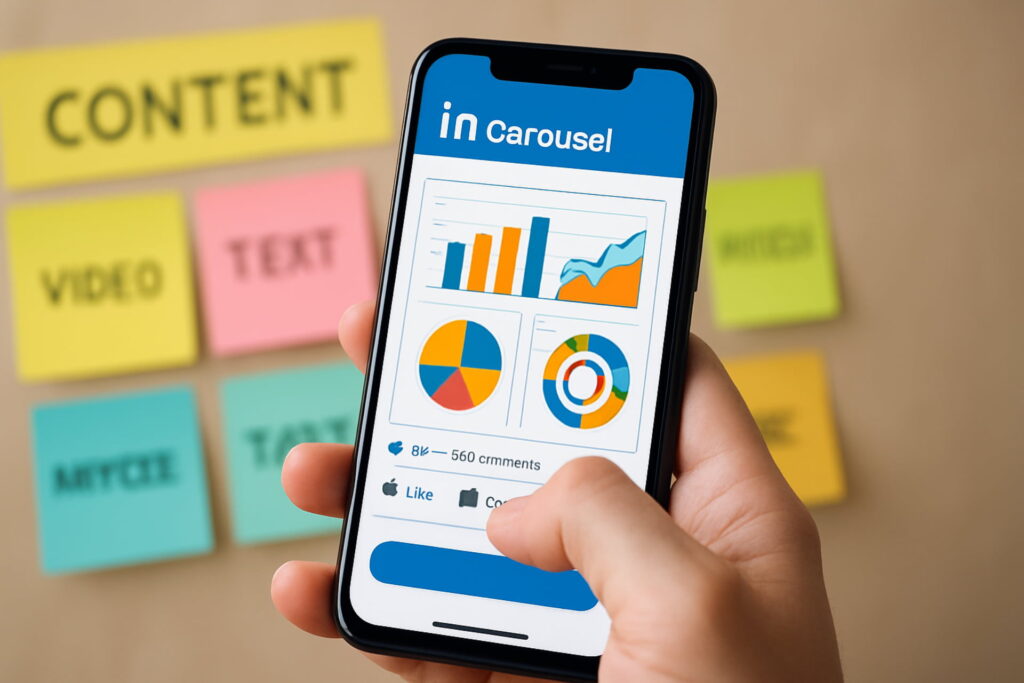
| Carousel/Document | Very High (Dwell time is key) | Step-by-step guides, complex data visualization, checklists. |
| Articles/Newsletters | Medium (Better for long-term SEO) | Deep-dive thought leadership, analysis, formal announcements. |
Crafting Engaging Hooks & CTAs
The first line (the Hook) determines if a user clicks “See More.” The last line (the CTA) directs the user’s next action.
- Engaging Hooks: Start with a bold statement, a question, a statistic, or a personal anecdote. (e.g., “I just wasted 4 hours on a campaign. Here’s why…”)
- CTAs: Always guide the reader. Examples include: “What is your biggest takeaway?” (to drive comments), “Share this with a colleague who needs it,” or “DM me for the full guide.”
Using Hashtags Strategically
Hashtags expand your reach beyond your direct network.
- Strategic Use: Use a mix of:
- Niche Hashtags (1-2): Highly specific (#SaaSContentStrategy).
- Medium Volume (2-3): Industry-specific (#DigitalMarketing).
- High Volume (1-2): Broad topics (#Marketing, #LinkedIn).
- Placement: It is advised that they be placed at the very end of the post, ideally separated from the main text body.
Personal Branding through Consistent Content
Your content should adhere to the “Three Cs” of personal branding: Consistency, Clarity, and Credibility.
- Clarity: Ensure your niche is clearly defined in every post. Do not try to appeal to everyone.
- Consistency: Post at least 3-5 times per week. This reinforces your position as a reliable source of information.
Understanding LinkedIn Pulse & Article Publishing
LinkedIn Articles (or Pulse) are better suited for long-form content that requires search engine indexation.
- Purpose: Use articles for evergreen content, industry reports, and detailed guides. They are indexed by Google, providing long-term SEO benefits.
- Newsletter Marketing: Utilize the Newsletter feature (if available) to notify followers directly when a new article is published. This is a highly effective way to guarantee post visibility.
Module 5: LinkedIn Company Page Optimization
The Company Page serves as the official corporate voice and is a trust signal for prospects.
Setting Up & Verifying a Company Page
Ensure the page details are fully completed and verified. A professional appearance is essential.
- Verification: Complete all mandatory fields, including the logo, banner, and description. Verification signals authenticity to users.
- Compelling Company Description: Incorporate your primary keywords and clearly articulate the company’s mission and value proposition in the “About Us” section.
Engaging Employees as Brand Ambassadors
Employee advocacy dramatically increases the reach and trust of Company Page content.
- Strategy: Encourage employees to share, like, and comment on Company Page posts, particularly in the first hour of publishing. An effective employee advocacy program can drastically boost organic reach.
Using Showcase Pages for Products/Services
Showcase Pages allow you to highlight specific business units, products, or services.
- Purpose: If your company offers multiple distinct services, a separate Showcase Page for each can target specific demographics and industries with highly tailored content. This method enhances lead quality significantly.
Module 6: LinkedIn Content Marketing Tactics
These advanced tactics help maximize organic growth and establish thought leadership.
Organic Growth Hacks
These non-paid methods focus on leveraging community and algorithmic signals.
- Polls and Quizzes: These drive immediate, high-volume engagement, which the algorithm favors heavily.
- Carousel Post Strategies: Carousels (PDF uploads) force users to spend more time clicking through slides, increasing Dwell Time—a key metric favored by the algorithm.
Leveraging AI Tools for Content Creation (2025 Tools Overview)
AI has become an indispensable assistant for content creation, aiding efficiency and idea generation.
- Tools: Platforms like ChatGPT, Jasper, and Copy.ai can be used to:
- Generate engaging content hooks and variations.
- Draft initial long-form articles quickly.
- Summarize complex industry reports for short posts.
- Caution: AI-generated content must always be edited and humanized to maintain authenticity and brand voice.
Building Authority with Thought Leadership Posts
Thought leadership posts position you or your company as an authority. This is achieved through proprietary insights.
- Focus: Share original data, counter-intuitive opinions, or unique processes that are not widely available. It is advised that these posts offer unique value, encouraging debate and discussion.
Module 7: LinkedIn Ads (Paid Marketing)
LinkedIn Advertising is crucial for scaling B2B lead generation with precision and speed.
Introduction to LinkedIn Campaign Manager
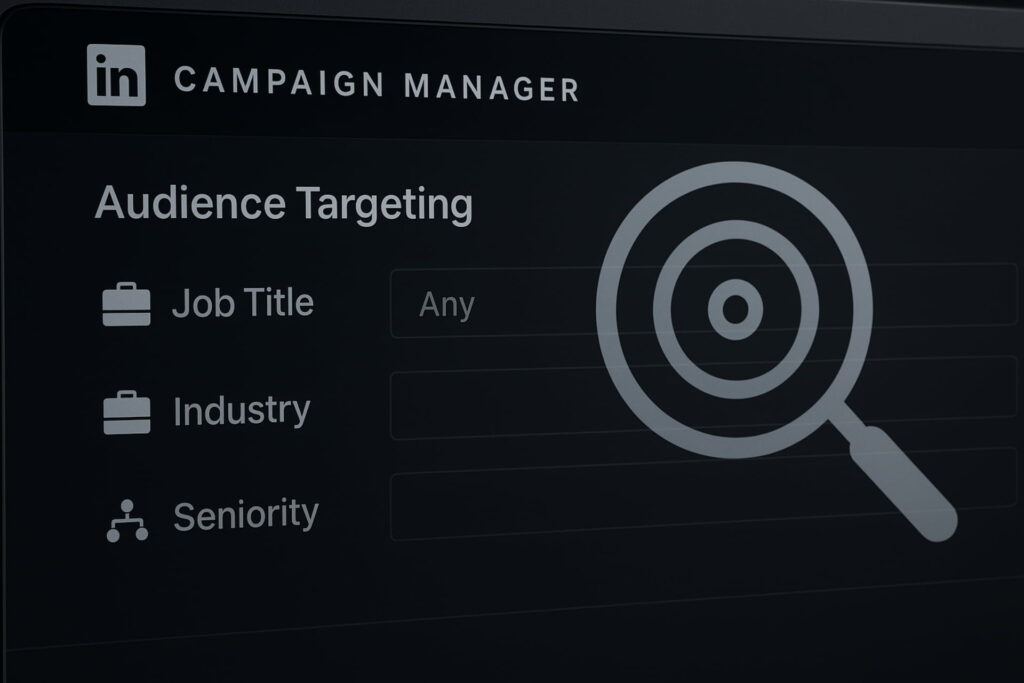
The Campaign Manager is the central hub for creating, managing, and tracking all paid campaigns. Understanding its structure is essential before launching any ad.
- Set up: Properly configure your Ad Account, define billing information, and establish your core target markets within the manager interface.
Types of LinkedIn Ads
Selecting the correct ad format based on your objective is a critical first step.
- Sponsored Content: These appear directly in the feed and are excellent for visibility and driving traffic to articles or case studies.
- Message Ads (InMail): These are direct, personalized messages delivered to prospects inboxes. They are highly effective for direct lead generation and event promotion.
- Lead Gen Forms Setup: This feature allows users to submit their contact information directly from the ad click, significantly improving conversion rates by eliminating the need to visit an external landing page.
Campaign Objectives & Targeting Options
Targeting precision is LinkedIn’s primary paid advantage.
- Audience Targeting: Use the detailed filtering options to target prospects by Job Title, Industry, Seniority Level, Specific Skills, and even Company Size. This granularity ensures that your budget is spent reaching the most qualified users.
- A/B Testing: Always run concurrent tests of different ad creatives, headlines, and calls-to-action (CTAs). This systematic approach helps optimize your budget and consistently identify the best-performing elements.
Module 8: Analytics and Performance Tracking
Tracking performance is non-negotiable for proving ROI (Return on Investment) and continuous improvement.
Key Metrics to Track
The metrics tracked should always align with your primary business objectives.
- Organic: Impressions, Engagement Rate, Follows, Dwell Time (time spent on carousels/videos).
- Paid: Click-Through Rate (CTR), Conversion Rate, Cost Per Lead (CPL), and Return on Ad Spend (ROAS).
Integrating LinkedIn Data with Google Analytics
For comprehensive reporting, it is important that LinkedIn data be integrated with external tools.
- UTM Parameters: Use UTM tags (e.g.,
utm_source=linkedin&utm_medium=paid&utm_campaign=q3_leadgen) on all external links shared in posts or ads. This method allows you to accurately measure which LinkedIn traffic drove specific conversions on your website using Google Analytics.
Module 9: LinkedIn Sales & Lead Generation
LinkedIn is the ultimate sales enablement platform, especially for B2B transactions.
Using LinkedIn for B2B Lead Generation
The goal is to move cold prospects into warm, actionable leads.
- Advanced Search and Boolean Search Techniques: Utilize advanced filters to build highly specific prospect lists (e.g., searching for “CMO” AND “Financial Services” in “New York”).
- Creating Lead Magnets and Offers: Offer valuable, gated content (e.g., an industry checklist, a template, or a detailed report) to capture contact information and build your database.
Cold Outreach Strategy on LinkedIn
Effective cold outreach is personalized and value-driven, never overtly promotional.
- Strategy: Your initial message should acknowledge the recipient’s background or recent activity, offer a piece of relevant, non-gated value, and conclude with a low-friction question. Example: “I saw your company is expanding into [Market]. I’ve put together a quick 3-point checklist for that transition—would you be open to me sharing it?”
Module 10: LinkedIn Automation & Tools
Automation, when used correctly, can dramatically increase efficiency in networking and content distribution.
Top LinkedIn Tools for Automation
- Sales Navigator: (Mentioned previously) Essential for lead list building and tracking.
- Scheduling Tools (Buffer, Hootsuite, Publisher, etc.): Allow for consistent posting across multiple platforms and optimized scheduling times.
- AI Assistants for Content Writing: Tools like Jasper and ChatGPT provide scalable support for drafting, editing, and repurposing content across the modules.
LinkedIn Chrome Extensions for Productivity
A few targeted extensions can significantly streamline daily tasks. These often focus on exporting contact data, analyzing profiles, or simplifying content formatting.
Module 11: LinkedIn Personal Branding
Personal branding is not just about popularity; it’s about perceived expertise and influence.
Building a Thought Leader Persona
A thought leader is someone whose expertise is recognized and sought after within their industry.
- Strategy: Consistently share unique insights, critique industry trends, and offer proven solutions to complex problems. Your perspective must be authoritative and original.
How to Go Viral on LinkedIn
While true virality is hard to predict, posts that incorporate these elements have the highest probability of gaining wide reach:
- Post Timing: Post during peak professional hours (Tues-Thurs, 8 AM – 12 PM, or 4 PM – 6 PM local time).
- Hooks and Formatting: Use short, punchy sentences and a clear structure (bullet points, numbered lists) for maximum readability.
- Emojis: Emojis should be used strategically to break up text and convey tone, but they must be professional and relevant.
Positioning Yourself as an Expert
Speaking opportunities and collaborations serve as strong social proof.
- Collaborations: Partner with other experts (joint posts, live interviews). This cross-pollination exposes you to new, high-quality networks.
- Speaking Opportunities via LinkedIn: Announce speaking engagements (conferences, webinars) directly on your profile. This solidifies your position as an industry expert and authority.
This comprehensive guide provides the framework for professional LinkedIn success. It is important that the principles of authenticity and genuine value exchange be maintained in all your marketing efforts.
Stay updated with the latest blogs by visiting our website.