Welcome to the exciting world of business growth! If you are launching a new product, or even if you are just trying to grow your brand, the terms marketing vs advertising are used constantly. However, these two terms are not interchangeable. In fact, understanding the relationship between the two is the first step toward becoming a strategic business leader.
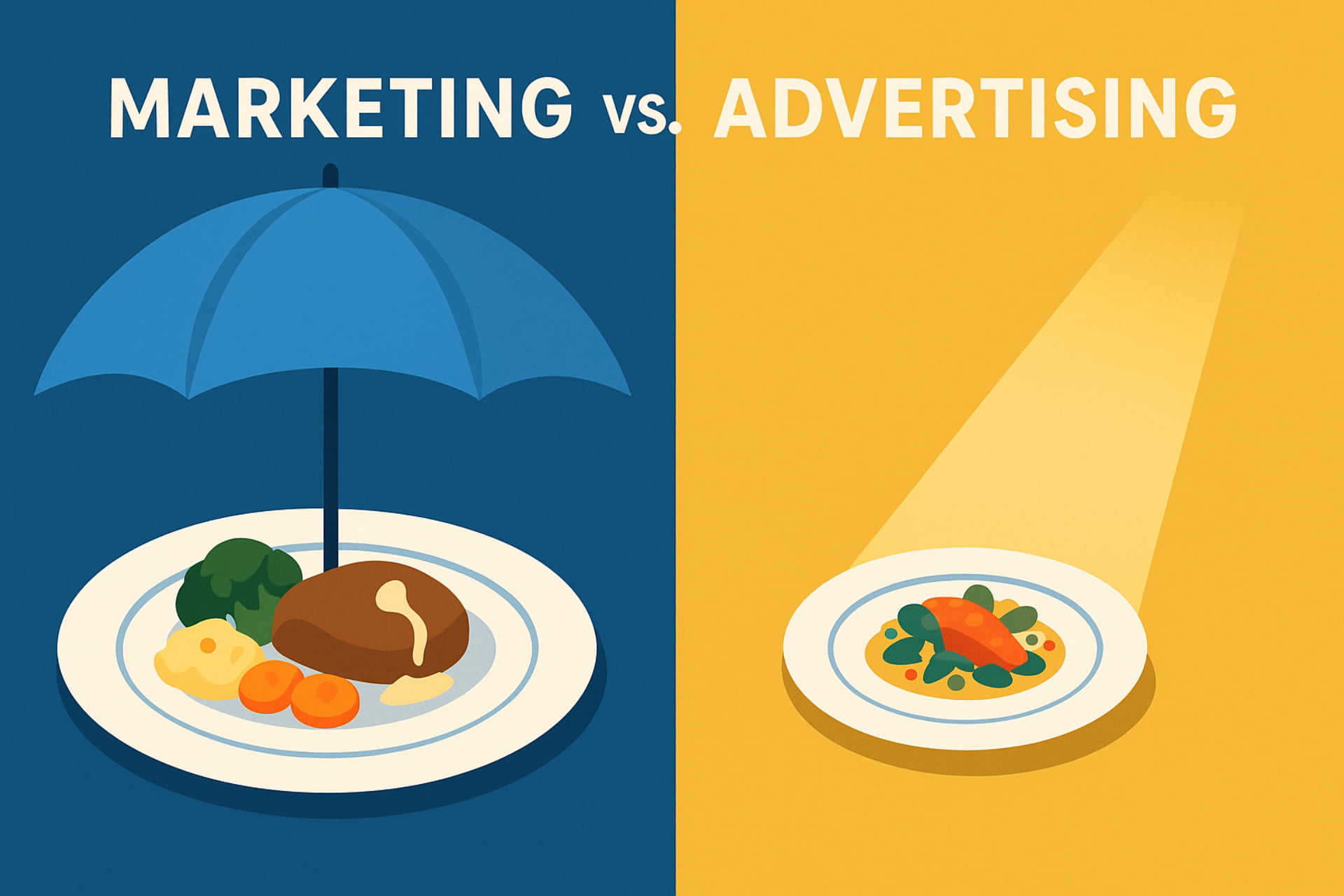
Think of it this way: Marketing is the full-course meal, and advertising is just one dish on the menu.
What Comes First, Advertising or Marketing?
This is a common question. What comes first, advertising or marketing?
The answer is unequivocally: Marketing always comes first.
Marketing involves the foundational work—researching customer needs, defining your product’s value, and setting the price. Advertising cannot begin until this essential strategic groundwork has been completed. It is an action taken after the strategy has been defined.
Decoding the Core Difference
Simply put, marketing is the overall strategy of creating, communicating, and delivering value to customers. Advertising is a specific promotional activity within marketing, focused purely on paid media to drive awareness and sales.
Let us explore the key distinctions that professional marketers rely on every day.
The 8 Major Differences Between Marketing and Advertising
While they work hand-in-hand, marketing and advertising serve different masters. Understanding their unique roles clarifies where you should allocate your time, effort, and budget.
01. Purpose: Nurture vs. Convert
| Area | Marketing | Advertising |
| Primary Goal | Builds relationships, brand reputation, and long-term customer engagement. | is designed to grab attention and push immediate actions (sales, clicks, sign-ups). |
| Mantra | Marketing nurtures; advertising converts. |
A relationship is built over time; therefore, marketing’s purpose is inherently patient. In contrast, advertising is an urgent tool used to prompt a quick response.
02. Intention: Creating Demand vs. Driving Action
The intention behind each discipline is very different.
- Marketing focuses on creating demand and positioning a brand powerfully in the market. It educates first and then slowly moves toward conversion.
- Advertising focuses on increasing visibility and persuading people to take immediate action. It directly sells, bypassing the extensive educational process.
03. Scope: The Umbrella vs. The Spoke
The scope defines the range of activities covered. This difference is critical for budget planning.
- Marketing is the umbrella. It includes everything from branding, market research, product development, pricing, and content strategy.
- Advertising is just one of the spokes. It only covers paid promotional tactics, such as social media ads, TV commercials, and billboards.
04. Cost & Scalability: Budget Required?
What pays more, advertising or marketing? The salaries can overlap, but advertising generally requires a specific budget allocation for the activity itself.
- Marketing can be done both organically (low-cost, via SEO and content) and through paid methods. It can be scaled with better content and a refined strategy.
- Advertising always requires a budget, whether for digital ads, print, or TV. Therefore, scaling advertising directly requires more money to scale.
05. Customer Relationship: Trust vs. Urgency
The approach to the customer relationship defines the success of each method.
- Marketing focuses on building a loyal community and long-term customer engagement. It works to create trust.
- Advertising is more transactional. It aims at grabbing attention quickly but does not necessarily retain it long-term. It works to create urgency.
06. Communication Approach: Two-Way vs. One-Way
- Marketing embraces two-way communication. This means actively engaging with the audience through comments, conversations, and responsive content. Marketing listens.
- Advertising is typically one-way communication. It involves pushing messages out to grab attention. Advertising speaks.
07. Connection: Emotional vs. Transactional
Emotional connection is what turns customers into lifelong fans.
- Marketing builds emotional connections through consistent branding, storytelling, and long-term engagement. Marketing makes you love the brand.
- Advertising persuades through urgency, offers, and attention-grabbing tactics. Advertising makes you buy from it.
08. Customer Journey: Full Coverage vs. Targeted Focus
- Marketing covers the entire customer journey—from initial awareness to post-purchase loyalty and eventually, advocacy.
- Advertising mostly focuses on the awareness stage and moves directly to the conversion stage, aiming for a quick sale.
Planning Your Marketing Campaign (5 Essential Steps)
Building a robust marketing campaign requires a clear, strategic framework. The good news is that you do not have to start from scratch. These steps are followed by professional marketing teams globally.
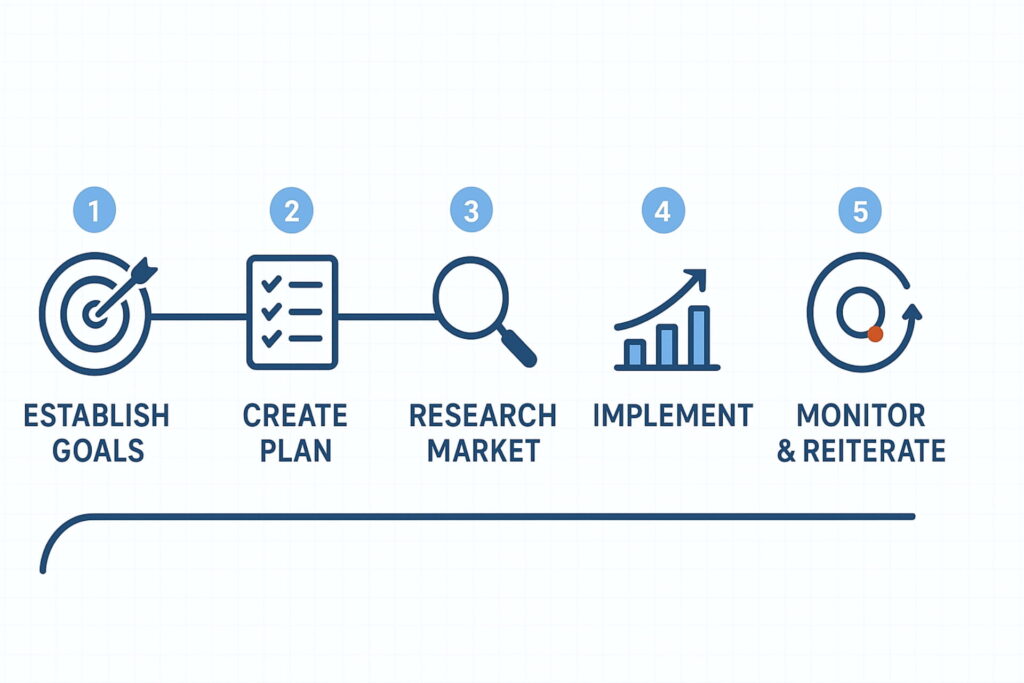
Step 1: Establish Your Goals (The Destination)
Creating a successful marketing strategy is like setting a waypoint for a road trip: you need a destination in mind.
- Decide Your Destination: Decide what goals you would like your marketing team to accomplish so you can begin crafting a strategy.
- Make Them Measurable: Always ensure your goals can be tracked and measured. If you need a framework, use the SMART goal format (Specific, Measurable, Achievable, Relevant, Time-bound). Alternatively, consider using Objectives and Key Results (OKRs) for broader initiatives.
Example Goal: It is the start of Q3, and feedback suggests your company’s brand awareness is below 10%. Your team sets a measurable goal to increase brand awareness to 15% by the end of Q4.
Step 2: Create a Detailed Marketing Plan (The Route Map)
A marketing plan outlines all the specific activities necessary to achieve your established objective.
- Actionable Steps: Based on your goals, what different actions must be taken? All these actions form your marketing plan.
- Monitor KPIs: It is essential to monitor relevant Key Performance Indicators (KPIs) for your marketing tactics to ensure you are moving in the right direction.
Example Plan: To increase brand awareness, your social media ad team kicks off digital awareness campaigns, while another team partners with influencers to showcase their products. The entire marketing department tracks this plan using a project management tool for organization and alignment.
Step 3: Research the Competitive Market (Scouting the Terrain)
Competitive research is not just for product development; it is vital for market positioning.
- Evaluate Competitors: Look at how similar brands and direct competitors are creating conversations, especially online. Note what they are doing well and where improvements could be made.
- Refine Your Strategy: Use these recommendations to strengthen your own marketing strategy. This research helps you choose the most effective channels.
Example Research: Your team runs competitive market research and notices that paid ads and sponsored posts with influencers are working well for your competitors. Because these tactics are proven in the market, your team decides to adopt similar avenues for your own plan.
Step 4: Implement Your Marketing Efforts (Starting the Engine)
After establishing goals, creating the plan, and researching the market, it is time to put the plan into action. This is the stage where assets are created, and campaigns go live.
- Define Roles: Clarify who will be responsible for which tasks.
- Track Assets: Determine where all your completed assets (images, videos, and copy) will be stored.
- Measure Performance: Confirm exactly how performance will be tracked and attributed to the goals. The answers to these questions will shape your strategy moving forward.
Example Implementation: Your brand awareness campaign is live! You track all the work using a project management tool like Asana so that every team member can easily see who is doing what by when, ensuring smooth execution.
Step 5: Monitor and Reiterate (Checking the GPS and Adjusting)
Once your marketing work is implemented, the final step is to step back and look at the results.
- Review Results: Compared to your initial research and goals, how is the campaign performing? Did your team hit their key objectives?
- Adjust and Optimize: Connecting your work to specific goals helps you decide what to reiterate or adjust for the next campaign. If an initiative did not perform as well as expected, adjust it or swap it out for a new one next time.
Example Monitoring: After monitoring the paid ad campaign and the influencer partnership, you notice that the influencer campaign increased brand awareness more than paid ads. As a result, you decide to allocate more budget and focus on the influencer tactic in the next quarter.
Become a Marketing Expert for Free! (Top YouTube Channels)
The marketing landscape changes fast. Fortunately, YouTube is the best platform to learn modern digital marketing skills for free, if you know the right channels.
Here are some of the most influential channels recommended by professionals to boost your expertise:
- DIGITAL TRAILBLAZER
Here you can watch this. DIGITAL TRAILBLAZER
- BILLY WILLSON
Here you can watch this. BILLY WILLSON
- SOCIAL MEDIA EXAMINER: A highly regarded source for social media strategies and news.
Here you can watch this. SOCIAL MEDIA EXAMINER
- BILLY GENE IS MARKETING
Here you can watch this. BILLY GENE IS MARKETING
- RYAN HILDRETH
Here you can watch this. RYAN HILDRETH
By following these experts and applying the strategic steps outlined above, you can confidently navigate the world of marketing and advertising, turning strategy into measurable success.
Stay updated with the latest blogs by visiting our website.