
I often get asked a very specific question by people looking to enter the digital world: “How do I learn SEO as a beginner?” When I first started my journey into search engine optimization, I felt completely overwhelmed. There were too many tools, too many “gurus,” and a lot of confusing jargon.
However, I quickly realized that SEO is not rocket science. It’s a mixture of gripping, science, and a lot of endurance. If you are reading this, you are probably wondering if it is still worth it. Is SEO dead or evolving in 2026? Let me tell you straight away—SEO is more alive than ever. It has simply changed its face.
In this guide, I will share my personal 8-step plan to help you master this skill. Whether you want to grow your own blog or start a new career, this is the only roadmap you will need.
Is SEO Dead or Evolving in 2026?
Before you dive into the “how-to,” allow yourself to face the elephant in the room. Many people claim that AI has killed search engines. I believe this is a huge misconception.
In my experience, SEO has transitioned from “tricking” search engines to “helping” users. As a result, Google now prioritizes and accepts the truth of delighting in more than simple keyword density. Search is moving towards AI-integrated results, but the core need for high-quality, optimized content remains. Therefore, SEO is not dead; it is just much smarter now.
Can I Learn SEO on My Own?
The short answer is yes. I am a firm believer that you can learn SEO on your own without an expensive degree.
The internet is full of free resources. You have access to blogs, YouTube tutorials, and official Google documentation. The real learning happens when you actually build a website and try to rank it. You can read all the theories in the world, but until you see your own page move from page 10 to page 1, you won’t truly understand the mechanics.
How long will it take to learn SEO?
In my view, you can learn the basics in 3 to 6 months. But remember, SEO is an ongoing process. Because search engine algorithms change every week, I am still learning something new every single day.
My 8-Step Plan to Master SEO
I have broken down the learning process into eight manageable steps. Follow these, and you will have a solid foundation.
1. Goal Setting & SEO Strategy
I always tell my students that starting without a goal is like driving without a map. Before you type a single word, you must define your “Why.”
- Traffic Growth: Do you want a 50% increase in 6 months?
- Conversions: Are you looking for leads or sales?
- Targeting: Is your audience local or global?
Additionally, you need to define your Key Performance Indicators (KPIs). I track organic traffic, click-through rates (CTR), and keyword rankings. Without these, your work is just guesswork.
2. Keyword Research: Finding the Golden Nuggets
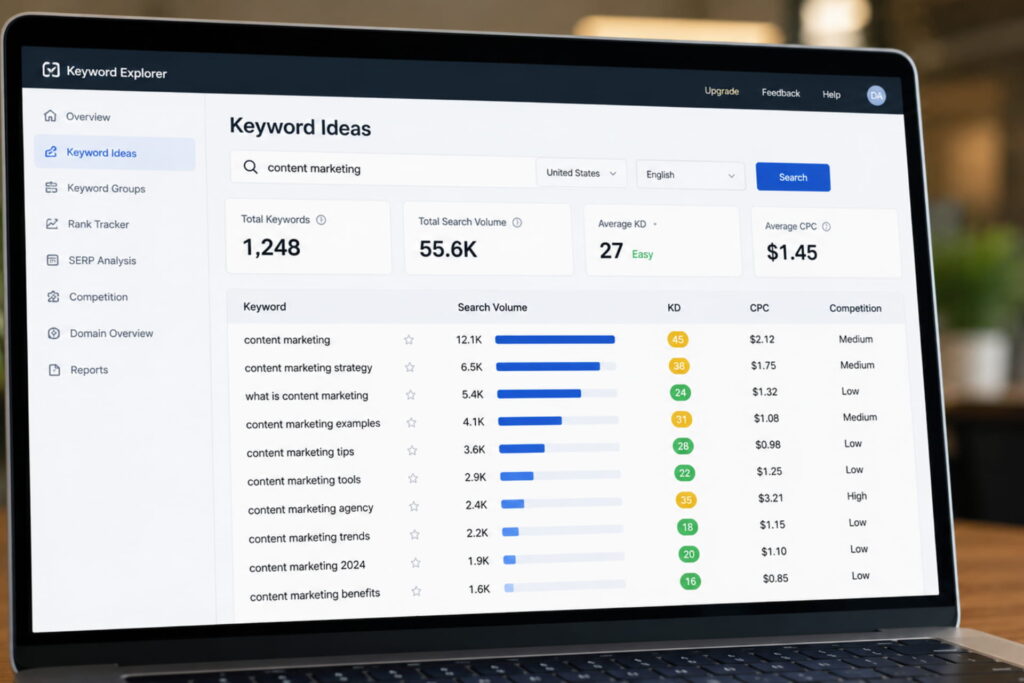
Keyword research is the heart of SEO. It is about finding what your audience is actually searching for. I use tools like Google Keyword Planner, Ahrefs, and SEMrush.
When I conduct research, I look at three main types of keywords:
User Intent: Is the user looking for information, or are they ready to buy?
Short-tail: High volume but very competitive (e.g., “SEO services”).
Long-tail: Lower volume but highly specific (e.g., “best SEO services for small business”).
3. Competitor Analysis: Learning from the Best
You don’t need to reinvent the wheel. I always study what is already working for my competitors. I identify the top websites ranking for my target keywords and analyze their strategy.
- What is their content structure?
- Where do their backlinks come from?
- What gaps did they miss?
By finding these gaps, I can create something even better. This is how I exploit the competition to rank higher.
What are the types of SEO?
To be a pro, you must understand the different “pillars” of optimization. I generally categorize them into three main areas:
- On-Page SEO: Content and HTML tags.
- Technical SEO: Site speed and backend structure.
- Off-Page SEO: Authority and link building.
Let’s look at these in more detail below.
4. On-Page SEO Optimization
This is the part of SEO that you have 100% control over. I spend a lot of time making sure every page is “perfect” for search engines.
- Title Tags & Meta Descriptions: These are your digital billboards. Make them catchy!
- Header Tags: I use H1, H2, and H3 tags to organize my thoughts.
- Natural Keyword Placement: Never “stuff” keywords. I write for humans first and search engines second.
- Internal Linking: I link my old posts to my new ones to help Google find them.
5. Technical SEO: The Hidden Engine
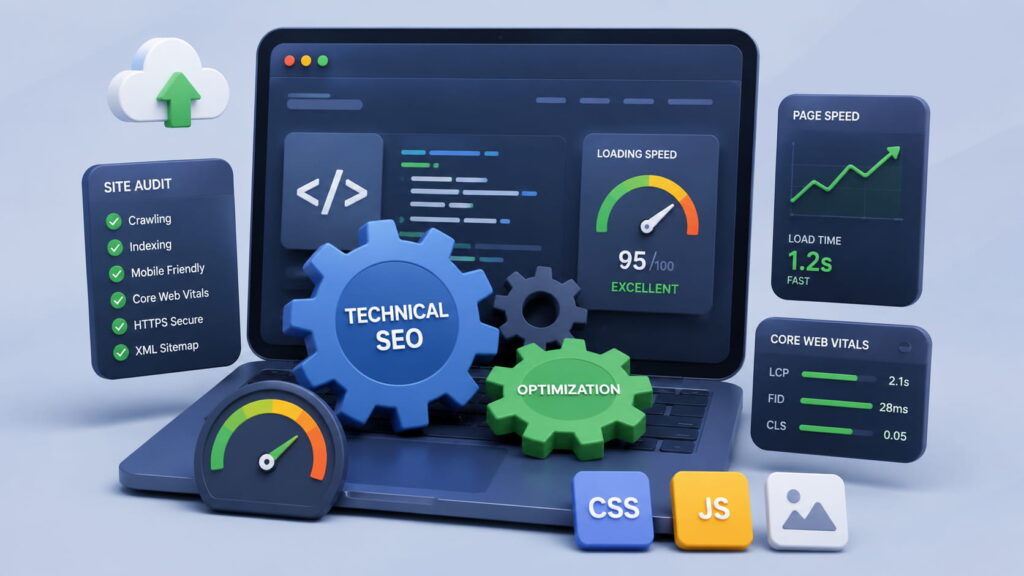
If Google can’t crawl your site, your rankings will never happen. I always check my site speed using Google PageSpeed Insights.
Furthermore, I ensure my site is mobile-friendly. In 2026, most users are on their phones. I also fix crawl errors and make sure my XML sitemap and robots.txt files are correctly set up. Finally, I never ignore HTTPS security. A safe site is a trusted site.
6. Content Strategy: The Backbone
In the world of SEO, content is king. But not just any content. I follow the EEAT principle: experience, expertise, authority, and trust.
I focus on creating high-quality guides and blog posts that solve problems. I believe that consistency beats perfection. If I post once a week consistently, I see better results than posting five times in one day and then disappearing for a month.
Off-Page SEO: Building Your Authority
7. Link Building (Quality over Quantity)
Off-page SEO is about building authority outside your own website. The most important part is backlinks. These are like “votes” of confidence from other sites.
I prefer getting one backlink from a high-authority site (like a major news outlet) over 100 backlinks from low-quality spam sites. Consequently, I focus on guest posting, business listings, and creating content that people naturally want to share.
8. Tracking, Analytics & Optimization
SEO is never “done.” It is an ongoing cycle of measuring and improving. I use Google Analytics and Google Search Console religiously.
I track which pages are performing well and which ones need more love. If I see a page’s ranking dropping, I update the content, add new keywords, and improve the speed. I stay flexible and optimize based on real-time data.
Can ChatGPT Do an SEO Audit?
This is a hot topic right now. I believe ChatGPT is an amazing assistant, but it is not a replacement for a human expert.
Can ChatGPT do an SEO audit? Yes, to an extent. It can analyze your meta tags, suggest keywords, and even find basic technical errors if you provide the data. However, it cannot “see” your website the way a human or a specialized tool like Ahrefs can. I use AI to speed up my work, but I always verify the results myself.
Is SEO a Good Career?
If you are looking for a job in 2026, SEO is a fantastic choice. Companies are moving their budgets from traditional TV ads to digital search.
Specifically, SEO specialists are in high demand for:
- In-house marketing teams.
- Digital agencies.
- Freelancing and consulting.
The pay is aggressive, and the work is intellectually stimulating. If you enjoy solving puzzles and staying ahead of trends, you will love this career.
Final Thoughts: Your Journey Starts Now
I know that learning SEO feels like climbing a mountain. But every expert you see today started exactly where you are right now.
Don’t wait for the “perfect” time to start. Set your goals today. Start your keyword research tomorrow. Build your first WordPress site next week. Before you know it, you will be the one explaining SEO to others.
In conclusion, SEO is a skill that gives you the power to control your own digital destiny. It is rewarding, profitable, and incredibly fun.
Stay updated with the latest blogs by visiting our website.