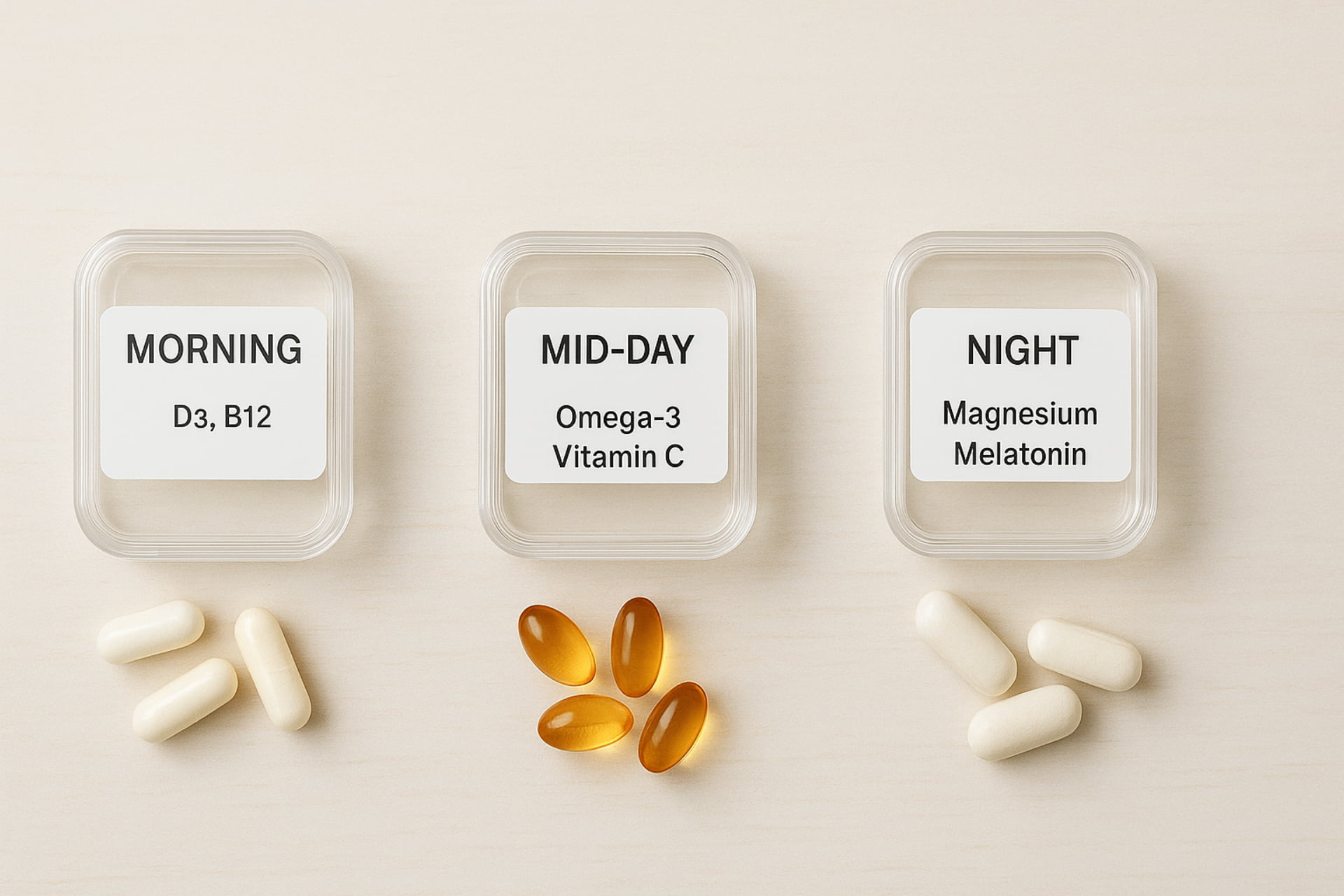
In today’s fast-paced world, achieving optimal health can often feel like a complex puzzle. Even with a balanced diet, essential nutrients can be missed due to modern food processing, lifestyle factors, or individual needs. Consequently, supplementation has become a necessity for many. But merely taking supplements is not enough. To truly harness the power of vitamins, minerals, and specialized compounds, one must understand the nuances of timing, optimal dosage, and smart pairing.
This comprehensive guide is meticulously crafted to eliminate the guesswork. We provide you with an in-depth, expert-level breakdown of the most popular supplements, complete with professional recommendations and critical pro tips. Therefore, you will be equipped to transform your supplement routine from random intake to a precise, performance-enhancing strategy.
Morning Essential Supplements: Kickstart Your Day with Energy and Focus
The morning offers a prime window for absorbing nutrients that fuel energy, metabolism, and mood for the day ahead. Furthermore, certain fat-soluble vitamins must be taken with food to ensure proper uptake by the body. This section details the supplements best consumed with your breakfast or early in the day.
1. Vitamin D3: The Sunshine Nutrient
Vitamin D3, or Cholecalciferol, is more than just a vitamin; it functions as a critical hormone in the body. What is vitamin D3 good for? Primarily, it is essential for bone health, working in tandem with calcium to prevent serious conditions like rickets and osteoporosis. Additionally, Vitamin D3 plays a vital role in supporting muscle function, nerve transmission, and the overall immune system.
Understanding Dosage and Timing
- Best Time: Morning, taken directly with breakfast.
- Dose (General): $1000-2000 \text{ IU/day}$. Your individual needs may vary based on sun exposure and existing levels.
- Pro Tip: Always take with healthy fats. Vitamin D3 is fat-soluble, meaning it requires fat (like ghee, avocado, or nuts in your breakfast) for optimal absorption into the bloodstream. It is advised that this vitamin be avoided at night, as it can interfere with melatonin production and sleep quality.
What are the symptoms of a lack of D3?
A deficiency is surprisingly common, especially among older adults, breastfed infants, people with dark skin, and those with limited sun exposure. Symptoms of a D3 deficiency are often subtle initially but can escalate. They include:
- Fatigue and general weakness.
- Bone pain and muscle weakness.
- Frequent illness/impaired immune function.
- In severe cases, Rickets (in children) and Osteomalacia/Osteoporosis (in adults).
What are the side effects of vitamin D3?
While generally safe at recommended doses, excessive intake can lead to vitamin D toxicity. The side effects of vitamin D3 overdose are caused by high calcium levels in the blood, which may result in:
- Loss of appetite and weight loss.
- Nausea, vomiting, and constipation.
- Weakness.
2. Vitamin B12: The Energy and Nerve Powerhouse
Vitamin B12 is indispensable for the formation of red blood cells and for maintaining healthy nerve function. What is vitamin B12 good for? It plays a key part in DNA synthesis and energy production. Furthermore, it supports cognitive functions, including memory and focus.
Understanding Dosage and Timing
- Best Time: Morning, preferably on an empty stomach for better absorption, or with a light meal.
- Dose: $500-1000 \text{ mcg/day}$ (Consult your doctor for personalized advice).
- Pro Tip: If you experience a jittery feeling or overstimulation after taking a solo B12 supplement, consider switching to a B-complex formulation. A B-complex provides a balanced profile of all B vitamins, which work synergistically.
What are the symptoms of a B12 deficiency?
The symptoms of a B12 deficiency can be quite debilitating as they affect both the blood and nervous systems. What are the bad effects of B12 deficiency? A severe lack can lead to pernicious anemia, a serious blood condition. Other symptoms are:
- Extreme fatigue and weakness.
- Nerve damage (neuropathy), which causes tingling, numbness, or “pins and needles.”
- Vision problems and difficulty walking.
- Mood changes, including depression and memory impairment.
3. Biotin: For Hair, Skin, and Metabolism
Biotin, also known as Vitamin B7, is crucial for the metabolism of fats, carbohydrates, and amino acids. What is biotin good for? It’s extensively honored for its part in promoting healthy hair, skin, and nails. However, its primary function is metabolic.
Understanding Dosage and Timing
- Best Time: Morning.
- Dose: $2500-5000 \text{ mcg/day}$.
- Pro Tip: Biotin is best utilized by the body when taken alongside a complete B-complex and a protein-rich meal, which enhances its metabolic cofactor role.
What are the symptoms of a lack of biotin?
While rare, a deficiency can occur and manifest primarily as:
- Skin rash (seborrheic dermatitis, especially in infants).
- Hair loss (alopecia).
- Neurological symptoms in severe cases.
What are the bad effects of biotin?
Generally, biotin is considered safe. The bad effects of biotin are minimal, but it is known to interfere with some laboratory tests (like thyroid tests), so your doctor should be informed if you are taking a high-dose supplement.
4. Multivitamin: Your Daily Nutritional Foundation
A multivitamin serves as a daily insurance policy, filling potential dietary gaps. What is a Multivitamin good for? It provides a broad spectrum of essential micronutrients needed for various bodily functions, treating deficiencies caused by poor nutrition or certain medical conditions.
Understanding Dosage and Timing
- Best Time: With breakfast. The fat-soluble vitamins (A, D, E, K) contained within the multi require food, and taking it in the morning establishes a consistent habit.
- Dose: As per the label instructions.
- Pro Tip: Always choose a multivitamin without added sugar, unnecessary coloring, or artificial fillers. Quality matters significantly in supplement absorption.
What are the symptoms of a lack of multivitamins?
A lack of sufficient vitamins and minerals can lead to a host of non-specific symptoms, which a good multivitamin can help prevent. These may include:
- Brittle hair and nails.
- General fatigue and low energy.
- Weakened immune response (frequent colds).
5. Green Tea Extract (GTE): Metabolism and Antioxidant Support
Green Tea Extract is celebrated for its concentration of powerful antioxidants called catechins, particularly EGCG (Epigallocatechin Gallate). What is Green Tea Extract good for? It is widely promoted for boosting metabolism, aiding in modest weight loss, and protecting against chronic diseases due to its antioxidant and anti-inflammatory effects.
Understanding Dosage and Timing
- Best Time: Morning.
- Dose: $250-500 \text{ mg/day}$.
- Pro Tip: Avoid taking it too late in the day because its natural caffeine content may disrupt sleep patterns. Furthermore, if you suffer from acidity or GERD, it may be necessary to avoid GTE, as it can potentially exacerbate these conditions.
What are the bad effects of Green Tea Extract?
While a beverage is safe, high-dose extracts can present bad effects, though uncommon. These may include:
- Nausea, constipation, and abdominal discomfort.
- Reported, but rare, liver injury in susceptible individuals (consult a doctor immediately if symptoms occur).
6. L-THEANINE WITH COFFEE: Focused Calm
L-Theanine, an amino acid naturally found in tea leaves, is often combined with caffeine (as in coffee) to achieve a state of focused calm. What is L-THEANINE WITH COFFEE good for? Theanine’s unique benefit is its ability to increase alpha brain waves, inducing relaxation without sedation.
Understanding Dosage and Timing
- Best Time: With your morning coffee, or approximately 5-10 minutes before.
- Dose: $100-200 \text{ mg/day}$.
- Pro Tip: This combination is perfect for individuals who love coffee but experience jitters, anxiety, or a rapid energy crash from the caffeine alone. If you drink two cups, take theanine with the first one.
What are the bad effects of L-THEANINE WITH COFFEE?
Generally, L-Theanine is very well-tolerated and is known to mitigate the negative effects of caffeine, such as increased blood pressure and sleep disruption. Bad effects are rare at recommended doses.
Mid-Day Absorption Boosters: Taken with Food for Maximum Efficacy
The body’s digestive processes are at their peak during meal times, especially those containing fats. This makes the midday period ideal for supplements that rely heavily on proper absorption.
7. Vitamin C: The Immune and Antioxidant Shield
Vitamin C is a powerful water-soluble antioxidant essential for countless processes. What is vitamin C good for? It protects cells, helps with wound healing, and is vital for maintaining healthy skin, blood vessels, bones, and cartilage. It also boosts collagen formation.
Understanding Dosage and Timing
- Best Time: With meals. As a water-soluble vitamin, food buffers its acidity and supports steady absorption.
- Dose: $500-1000 \text{ mg/day}$.
- Pro Tip: If you experience stomach acidity or discomfort, it is highly recommended that you divide the total daily dose into two smaller servings: one in the morning (AM) and one in the evening (PM).
What are the symptoms of low vitamin C?
The symptoms of low vitamin C can lead to significant health issues. What are the bad effects of vitamin C deficiency? The classic deficiency disease is Scurvy, characterized by:
- Easy bruising and bleeding gums.
- Joint and muscle pain.
- Poor wound healing.
- Fatigue.
What are the bad effects of vitamin C?
Taking large amounts (over $1000 \text{ mg/day}$) can occasionally cause:
- Stomach pain and discomfort.
- Diarrhea and flatulence.
8. Omega-3 / Fish Oil: Heart, Brain, and Joint Health
Omega-3 fatty acids, specifically EPA (Eicosapentaenoic Acid) and DHA (Docosahexaenoic Acid), are essential polyunsaturated fats that the body cannot produce on its own. What does Omega-3 do to the body? It is crucial for brain, eye, and heart function. What is omega used to treat? Omega-3s are used to reduce inflammation, which is implicated in chronic conditions like heart disease, rheumatoid arthritis, and some neurological disorders.
Understanding Dosage and Timing
- Best Time: After meals (breakfast or lunch).
- Dose: $250-1000 \text{ mg DHA+EPA/day}$ (general). Higher doses (up to $2000 \text{ mg}$) may be taken under medical guidance for inflammation or joint pain.
- Pro Tip: Take your Omega-3 supplement with your fat-rich meal. This significantly improves absorption and helps prevent the common and unpleasant side effect of fishy burping or aftertaste.
What are the symptoms of a lack of omega-3?
The symptoms of a lack of omega-3 can include:
- Dry skin, hair, and brittle nails.
- Poor circulation and fatigue.
- Impaired memory and focus.
- Mood swings and depression.
What are the bad effects of omega-3?
The bad effects of omega-3 are generally mild and related to digestion:
- Fishy aftertaste and bad breath.
- Heartburn, nausea, and diarrhea.
- High doses may increase the risk of bleeding, especially when taken with blood-thinning medication.
9. Curcumin (Turmeric Extract): Natural Anti-Inflammatory
Curcumin is the primary active compound found in the spice turmeric. What is Curcumin good for? It is a powerful natural anti-inflammatory agent and antioxidant. It is believed to support joint health, cardiovascular function, and help reduce chronic inflammation throughout the body.
Understanding Dosage and Timing
- Best Time: With meals.
- Dose: $500-1000 \text{ mg/day}$.
- Pro Tip: Curcumin has notoriously poor bioavailability. For effective absorption, it absolutely needs to be taken with black pepper extract (piperine) or a source of healthy fat (like the fats in your meal).
What are the bad effects of Curcumin?
Curcumin is safe for most individuals. Bad effects are rare but can include mild digestive upset if taken in very large doses on an empty stomach.
10. Apple Cider Vinegar (ACV): Digestive Support
Apple Cider Vinegar (ACV) is a traditional remedy gaining modern popularity for its systemic benefits. What is Apple Cider Vinegar good for? It is primarily used to support digestion, reduce bloating, and may help modulate blood sugar levels after meals.
Understanding Dosage and Timing
- Best Time: Before meals (5-10 minutes prior).
- Dose: $500-800 \text{ mg/day}$ (typically in capsule form) or 1-2 tablespoons diluted in water.
- Pro Tip: ACV is especially helpful for people suffering from IBS symptoms, aiding in the breakdown of food and reducing post-meal bloating. Always dilute liquid ACV to protect tooth enamel.
What are the side effects of apple cider vinegar?
Overconsumption of liquid ACV can cause dental erosion due to its acidity. Other bad effects of ACV are primarily linked to digestive irritation, which can be minimized by taking it with food or in capsule form.
11. Milk Thistle: Liver Detox Support
Milk Thistle, containing the active compound silymarin, is one of the most widely used herbal supplements for liver health. What is Milk Thistle good for? It is frequently utilized as a complementary treatment for fatty liver disease, protecting liver cells from toxins and promoting regeneration.
Understanding Dosage and Timing
- Best Time: Anytime.
- Dose: $150-300 \text{ mg/day}$ (standardized extract).
- Pro Tip: For noticeable benefits, particularly concerning fatty liver, the supplement must be taken consistently for a period of 3-6 weeks.
What are the bad effects of Milk Thistle?
Milk Thistle is generally safe. Bad effects are usually mild and may include digestive upset, such as bloating or diarrhea.
Evening & Night-Time Supplements: Focus on Recovery and Rest
The evening provides the perfect opportunity to take supplements that facilitate muscle recovery, hormone balance, and, most importantly, high-quality sleep.
12. Magnesium Glycinate: The Relaxation Mineral
Magnesium is involved in over 300 enzyme systems that regulate biochemical reactions in the body. What does magnesium glycinate do? Magnesium Glycinate, specifically, is a highly bioavailable form known for being gentle on the stomach and promoting a profound state of relaxation.
Understanding Dosage and Timing
- Best Time: Night, approximately 30-60 minutes before bedtime.
- Dose: $200-350 \text{ mg/day}$.
- Pro Tip: Magnesium Glycinate is exceptional for improving the quality of sleep, reducing anxiety, easing muscle pain and cramps, and helping to alleviate symptoms related to PMS and menopause.
What are the symptoms of low magnesium glycinate?
While short-term deficiency symptoms are rare, low magnesium levels can lead to:
- Muscle cramps and twitching.
- Insomnia or trouble sleeping.
- Higher blood pressure and headaches.
- Fatigue and weakness.
What are the bad effects of magnesium glycinate?
In high doses, magnesium supplements can cause diarrhea and gastrointestinal irritation. However, Magnesium Glycinate is specifically formulated to have fewer gastrointestinal side effects compared to other forms like Magnesium Oxide.
13. Ashwagandha KSM-66: Stress Adaptation and Hormonal Balance

Ashwagandha is an adaptogenic herb widely used in Ayurvedic medicine. KSM-66 is a highly researched, full-spectrum extract. What is Ashwagandha KSM-66 good for? It is prized for its ability to help the body manage and adapt to stress by lowering cortisol levels. It is also shown to enhance sleep quality, improve memory, and boost strength and recovery.
Understanding Dosage and Timing
- Best Time: Night, or in the evening after dinner. Taking it at night supports stress relief and sleep.
- Dose: $300-600 \text{ mg/day}$.
- Pro Tip: Take it with food to avoid mild stomach discomfort. Crucially, avoid Ashwagandha if you are pregnant or have hyperthyroidism (high thyroid function); a doctor’s consultation is mandatory in such cases.
What are the bad effects of Ashwagandha KSM-66?
In general, it is well-tolerated. Bad effects are usually mild and can include digestive upset. Overconsumption may lead to drowsiness.
14. Melatonin: Short-Term Sleep Aid
Melatonin is a hormone produced naturally by the pineal gland that regulates the sleep-wake cycle. What is Melatonin good for? It is primarily used as a supplement to help with specific sleep issues, such as jet lag, delayed sleep-wake phase disorder, and short-term insomnia.
Understanding Dosage and Timing
- Best Time: Night, approximately 30 minutes before the desired sleep time.
- Dose: $1-3 \text{ mg/day}$.
- Pro Tip: Melatonin should only be used short-term. It is not recommended for daily, long-term use, as dependency can develop, and it may suppress the body’s natural production.
What are the bad effects of Melatonin?
The bad effects of Melatonin are usually mild:
- Daytime drowsiness (especially in older adults).
- Headache, dizziness, and nausea.
- Increased bedwetting in children.
Athletic & Recovery Supplements: Timing for Performance
These supplements are critical for supporting physical performance, muscle repair, and strength gains, with specific timing being key to maximizing their benefits.
15. Creatine Monohydrate: Strength and Recovery
Creatine Monohydrate is one of the most researched and effective supplements for improving athletic performance. What is Creatine Monohydrate good for? It increases phosphocreatine stores in muscles, which provides rapid energy (ATP) for explosive movements, leading to improved strength, power, and muscle mass.

Understanding Dosage and Timing
- Best Time:
- Post-workout: This is considered the best time for maximum strength gain and muscle recovery.
- On non-training days: Anytime, ideally taken with a meal.
- Dose: $3-5 \text{ g/day}$ (standard daily dose).
- Pro Tip: For general lifestyle users (not competitive athletes), there is no need for a loading phase. Consistent daily dosing of $3-5 \text{ g}$ is sufficient for saturation over time.
What are the bad effects of Creatine Monohydrate?
Creatine is very safe for most people. Bad effects of Creatine Monohydrate can include:
- Temporary water retention (which is distinct from fat gain).
- Mild digestive issues, especially if taken with insufficient water.
16. Whey Protein (Isolate vs. Concentrate): Post-Workout Fuel
Protein powder is the building block for muscle repair and growth. The choice between Isolate and Concentrate depends on your digestive tolerance and goals.
Whey Isolate
- What is Whey Isolate good for? It’s the highest purity form, containing $90\%+$ protein with very little fat, carbs, or lactose. It is perfect for those who are lactose-sensitive due to its faster absorption rate.
- Best Time: Post-workout (especially evenings).
- Dose: $20-25 \text{ g}$ protein.
- Pro Tip: It is the superior choice for those managing lactose intolerance or aiming for the absolute leanest protein source.
Whey Concentrate
- What is Whey Concentrate good for? It contains a slightly lower protein percentage (usually $70\%-80\%$) but retains more natural fats, carbohydrates, and lactose. It provides a fuller nutritional profile and is generally more affordable.
- Best Time: Post-workout.
- Dose: $20-25 \text{ g}$ protein.
- Pro Tip: Best for individuals who tolerate dairy well and prefer a slightly creamier texture and a more comprehensive nutrient base.
17. Plant Protein: A Vegan Alternative
Plant-based protein supplements, often derived from peas, rice, or hemp, offer a complete amino acid profile for those avoiding dairy. What is Plant Protein good for? It supports muscle repair and growth, just like whey, and is an excellent source of essential vitamins, minerals, and antioxidants.
Understanding Dosage and Timing
- Best Time: After a workout or with breakfast.
- Dose: $20-25 \text{ g}$ protein.
- Pro Tip: Opt for clean-label options that are free from added sugar, artificial sweeteners, or excessive artificial gums/thickeners, as these can cause bloating.
Specialized Micronutrients: Focus on Synergy and Specific Needs
These vitamins and minerals often require specific pairing or consumption protocols to be fully effective.
18. Vitamin E: Antioxidant and Cell Protection
Vitamin E is a potent fat-soluble antioxidant. What is vitamin E good for? It is important for vision, maintaining healthy blood, brain, and skin, and protecting cells from damage caused by free radicals.
Understanding Dosage and Timing
- Best Time: Empty stomach (though it is often taken with meals for absorption).
- Dose: Doctor-prescribed only, especially at higher doses.
- Pro Tip:
- It is known to work synergistically when taken with Vitamin C.
- Avoid taking it with tea, coffee, or calcium supplements for at least 2 hours, as these can hinder absorption.
- If nausea occurs, take it after a light meal.
What are the symptoms of a lack of vitamin E?
Deficiency is rare but can cause:
- Nerve pain (neuropathy).
- Vision problems (retinopathy) due to retinal damage.
- Muscle weakness.
What are the bad effects of vitamin E?
High doses of Vitamin E can increase the risk of bleeding, especially when combined with anticoagulant medication. Furthermore, some research suggests a potential link between high-dose supplementation and an increased risk of prostate cancer, making doctor-prescribed dosage critical.
19. Probiotics: Gut Health
Probiotics are live bacteria and yeasts that are beneficial for your gut health. What are Probiotics good for? They help restore the natural balance of the gut microbiome, which is essential for healthy digestion, nutrient absorption, and immune function. They are especially useful after illness or antibiotic use.
Understanding Dosage and Timing
- Best Time: Approximately 30 minutes before food. This allows the bacteria to travel quickly through the stomach’s acidic environment before the digestive process begins.
- Dose: $5-20 \text{ billion CFU/day}$ (CFU: Colony-Forming Units).
- Pro Tip: Never take probiotics with hot water or kadha (herbal tea), as the high temperature will kill the live bacteria, rendering the supplement ineffective.
What are the bad effects of Probiotics?
For most healthy people, probiotics are safe. Bad effects are usually mild and temporary, including gas, bloating, and mild digestive discomfort as the gut adjusts.
20. Collagen: The Body’s Scaffolding
Collagen is the most abundant protein in the body, providing structure to skin, bones, tendons, ligaments, and cartilage. What is collagen good for? Supplementation is commonly used to support joint pain reduction, improve skin elasticity, and strengthen hair and nails.
Understanding Dosage and Timing
- Best Time: Anytime.
- Dose: $5-10 \text{ g/day}$ (hydrolyzed collagen peptides).
- Pro Tip: Take Vitamin C simultaneously with your collagen. Vitamin C is an essential cofactor for the body’s own collagen synthesis (formation).
What are the symptoms of a lack of collagen?
As you age, natural collagen production decreases. Symptoms of lack of collagen can manifest as:
- Joint pain and stiffness.
- Loss of skin elasticity (wrinkles).
- Weaker connective tissues.
21. Zinc: Immune and Hormone Support
Zinc is a vital trace mineral involved in immune function, wound healing, DNA synthesis, and protein production. What is zinc good for? It is especially important for hormonal balance, taste and smell sensation, and prostate health.
Understanding Dosage and Timing
- Best Time: Empty stomach OR with light food.
- Dose: $15-30 \text{ mg/day}$.
- Pro Tip: Avoid taking Zinc with iron or calcium supplements, as these minerals compete for the same absorption pathways, blocking zinc uptake. If you experience nausea on an empty stomach, take it after a small, light meal.
What are the symptoms of a lack of zinc?
A deficiency can lead to:
- Impaired immune function (frequent infections).
- Loss of appetite.
- Hair loss.
- Delayed wound healing.
Conclusion: Making Supplements Work For You
The journey toward superior health through supplementation is one of precision. By aligning your intake with the body’s natural rhythms—taking fat-soluble nutrients with fats in the morning, digestive aids right before meals, and relaxing minerals before bed—optimal bioavailability is guaranteed.
Remember that supplements are intended to complement a healthy diet, not replace it. Furthermore, the information provided here serves as a comprehensive educational resource. It is always recommended that a doctor or qualified healthcare professional be consulted before starting any new supplement regimen, especially if you have pre-existing conditions or are currently taking prescription medication.
Maximize your health. Optimize your timing.
Stay updated with the latest blogs by visiting our website.