If you have been following global health news, you have likely heard the word “Ebola“ mentioned with a sense of urgency. It is a disease that carries a heavy reputation. When outbreaks happen, they dominate headlines. But what is it really, and how does it actually affect the human body? What is the reality of its transmission?
In this guide, I will break down everything you need to know about the Ebola virus. From its historical origins and scientific classification to the latest medical breakthroughs and survival statistics, I am going to share genuine, research-backed information. My goal is to clear up the confusion and replace fear with facts.
What is Ebola caused by?
Ebola, formally known as Ebola Virus Disease (EVD) or Ebola hemorrhagic fever (EHF), is a severe, often fatal illness. It is caused by a group of viruses belonging to the genus Ebolavirus.
The Viral Species
Specifically, four of the six known ebolaviruses are capable of causing disease in humans:
- Zaire ebolavirus (EBOV): This is the most dangerous and is responsible for the largest number of outbreaks.
- Sudan ebolavirus (SUDV).
- Taï Forest ebolavirus (TAFV).
- Bundibugyo ebolavirus (BDBV).
These viruses are zoonotic. This means they jump from animals to humans. Scientists also recognize the Reston virus and Bombali virus, though these are not thought to cause disease in humans.
How did humans first get Ebola?
Although it is not 100% certain, researchers believe the spread involves direct contact with infected wild animals. Fruit bats are considered the most likely herbivores. When humans hunt, handle, or consume infected “bushmeat”—such as bats, monkeys, apes, or antelope—the virus can make the jump to us. Once the first human is infected, the cycle of human-to-human transmission begins.
What Happens If You Get Ebola?
When the virus enters the body, it targets specific cells, including immune cells and the endothelial cells that line your blood vessels.
The Onset of Symptoms
The incubation period—the time from exposure to the first symptom—is usually between 2 and 21 days. In most cases, symptoms appear within 4 to 10 days. The disease starts suddenly, often resembling the common flu. You might experience:
- High fever: Typically over 101°F (38.3°C).
- Severe physical pain: This includes muscle aches, joint pain, and an intense, throbbing headache.
- Fatigue: An overwhelming sense of weakness that makes even standing difficult.
- Respiratory issues: A sore throat is a common early indicator.
How painful is Ebola?
The disease is notoriously painful. As it progresses, it causes nausea, vomiting, and severe diarrhea. This leads to intense dehydration, which contributes to the agony of the illness. In later stages, patients may experience internal and external bleeding. This is why it was historically called “Ebola hemorrhagic fever.”
What organ is affected by Ebola?
Ebola is a systemic disease. This means it affects the entire body rather than one specific area. However, the liver and the blood vessels are primary targets. The virus causes significant liver damage, which disrupts the body’s ability to produce the proteins necessary for blood clotting. This leads to the internal and external bleeding that marks the latter, most dangerous stages of the disease.
Is Ebola 100% fatal?
I hear this question a lot, and it is vital to get the facts straight. No, Ebola is not 100% fatal.
The mortality rate varies significantly depending on the viral strain and the quality of care. It ranges from 25% to 90%, with an average of about 50%. The survival rate depends heavily on how early treatment begins.
Is it possible to survive Ebola?
Yes, thousands of people have survived Ebola. Recovery typically begins between 7 and 14 days after the first symptoms appear. Survivors often develop antibodies that last for at least 10 years, though scientists are still studying whether they have full immunity against future infections.
Recovery is often difficult. Survivors may face ongoing issues like the following:
- Persistent joint and muscle pain.
- Chronic fatigue and weakness.
- Vision problems or inflammation of the eyes.
- Difficulty returning to pre-illness weight.
Transmission: How Does It Spread?
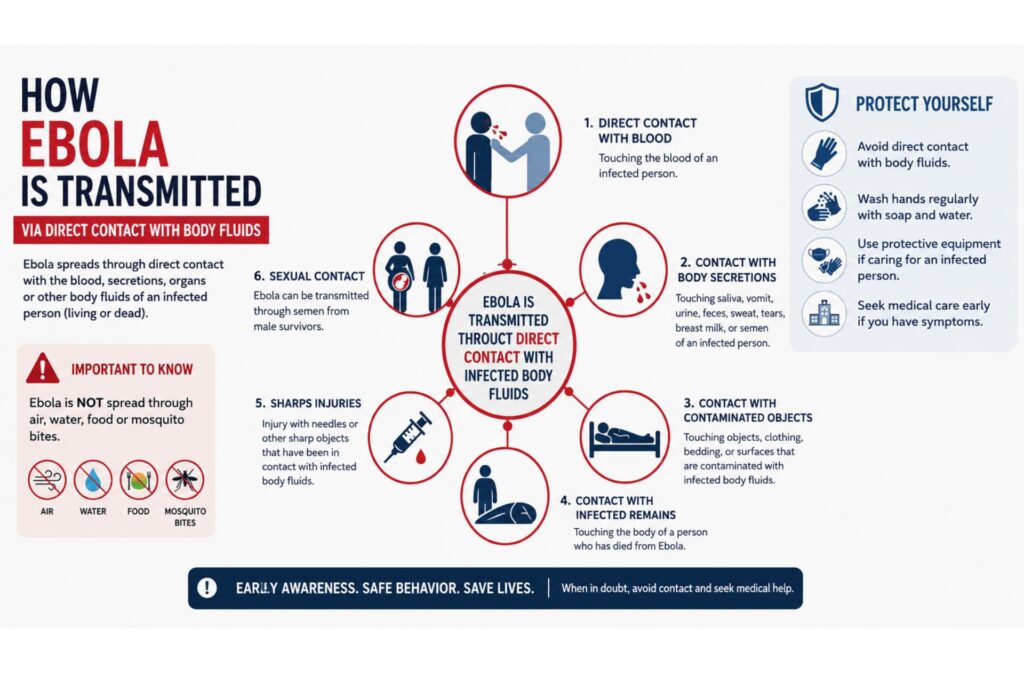
One of the most dangerous myths is that Ebola spreads through the air like the flu or COVID-19. Let me be clear: There have been no documented cases of Ebola spreading through the air between humans.
It spreads through direct contact with:
- Bodily Fluids: This includes blood, saliva, mucus, vomit, feces, sweat, breast milk, urine, and semen from a person who has developed symptoms.
- Contaminated Objects: Items like needles, syringes, or bedding that have been in contact with an infected person are significant risks.
- Infected Corpses: This is a major factor in outbreaks. Dead bodies remain highly infectious. Traditional burial rituals, where family members touch the deceased, have historically fueled the spread of the virus.
Why do healthcare workers get it?
Healthcare workers are at the highest risk. They are on the front lines, often working in areas where protective gear might be scarce or where hospital infrastructure is weak. If they do not wear their masks, gowns, and eye protection perfectly, the virus can bypass their defenses.
Can you get vaccinated against Ebola?
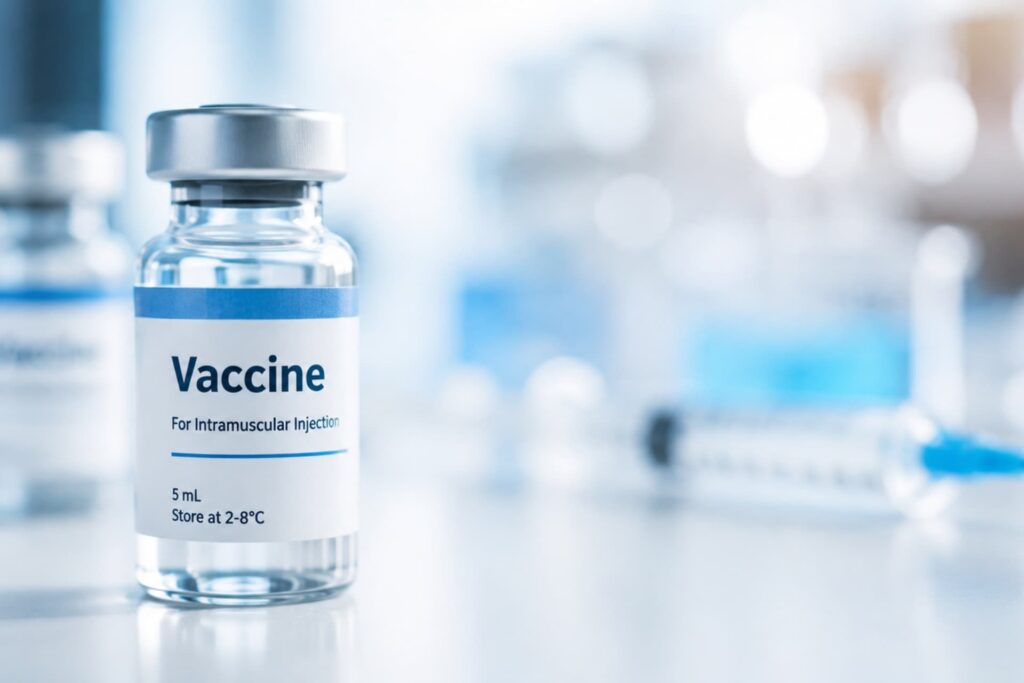
We have made incredible progress in medical science over the last decade. In December 2019, the U.S. FDA officially approved an Ebola vaccine, rVSV-ZEBOV.
It is highly effective. Clinical studies have shown that it can be fully effective ten days after administration. During the Kivu Ebola epidemic from 2018 to 2020, approximately 345,000 people were given the vaccine, which played a crucial role in stopping the epidemic.
What kills Ebola?
Outside of the human body, the virus is actually quite fragile. It can be killed by standard disinfectants, thorough cooking of bushmeat, and, most importantly, diligent handwashing. In hospitals, it is killed by rigorous infection control practices, such as the use of full-body personal protective equipment (PPE) and the isolation of infected patients.
How Did They Stop the Ebola Virus?
Stopping an outbreak is a massive, coordinated effort that requires more than just medicine. It requires community engagement and logistics.
The “formula” for stopping an outbreak includes the following:
- Rapid Detection: Identifying the first “index case” is the most important step.
- Contact Tracing: Health teams must find everyone who was in contact with an infected person. These people are monitored for 21 days to see if they develop symptoms.
- Supportive Care: Since there isn’t a cure for everyone, supportive care—like oral rehydration therapy or intravenous fluids—helps the body survive until the immune system can fight off the virus.
- Safe Burial Practices: Shifting community norms to ensure that burials are performed safely (by trained professionals) is essential.
- New Treatments: In October 2020, the FDA approved Inmazeb (a mix of three monoclonal antibodies). These treatments have been associated with significantly improved survival outcomes.
Who Discovered Ebola and What Was It Called?
The virus was first discovered in 1976. It was found near the Ebola River in what is now the Democratic Republic of the Congo. Before it was officially identified as Ebola, doctors were puzzled by patients who suffered from mysterious, severe hemorrhaging. It was initially categorized simply as a “viral hemorrhagic fever” before it was isolated and named after the river where the first outbreak occurred.
Final Thoughts: Staying Informed
Ebola is a serious disease, but it is not a mysterious, unstoppable force. We now have vaccines, better diagnostic tests, and proven treatment methods.
If you are worried about Ebola, remember the golden rule: it requires direct contact with infected fluids. By avoiding contact with bushmeat, following expert medical guidance, and supporting strong public health systems, we can stop outbreaks in their tracks. Stay curious, stay informed, and always rely on official health organizations like the WHO or the CDC for the most accurate, life-saving information.
Stay updated with the latest blogs by visiting our website.